
Why now?
Why tell dated stories of caregiving now? What's the news hook? Why should anyone care?

On May 25, 2026, we honored the 12th anniversary of my mom’s passing. No media headlines. No neon lights. No flowers, even. No messages from her siblings—for all but two have passed on as well. And my favorite aunt, Aunt Jean, is in her 90s. (Mom was #11 of a family of 12.)
But instead: tears. Stories shared. Much soul-searching.
Each year’s grief negotiates with me differently. This year chasmed. I still have so much to sift through: memories, emotions, tethers, thresholds, photographs, clothing, stones. I walk on this beach, pebbles in hand, dropping notables to mark some kind of journey—still trying to sort out the gold nuggets & petoskey stones, the stuff that lasts and sparks with bursts of beauty.
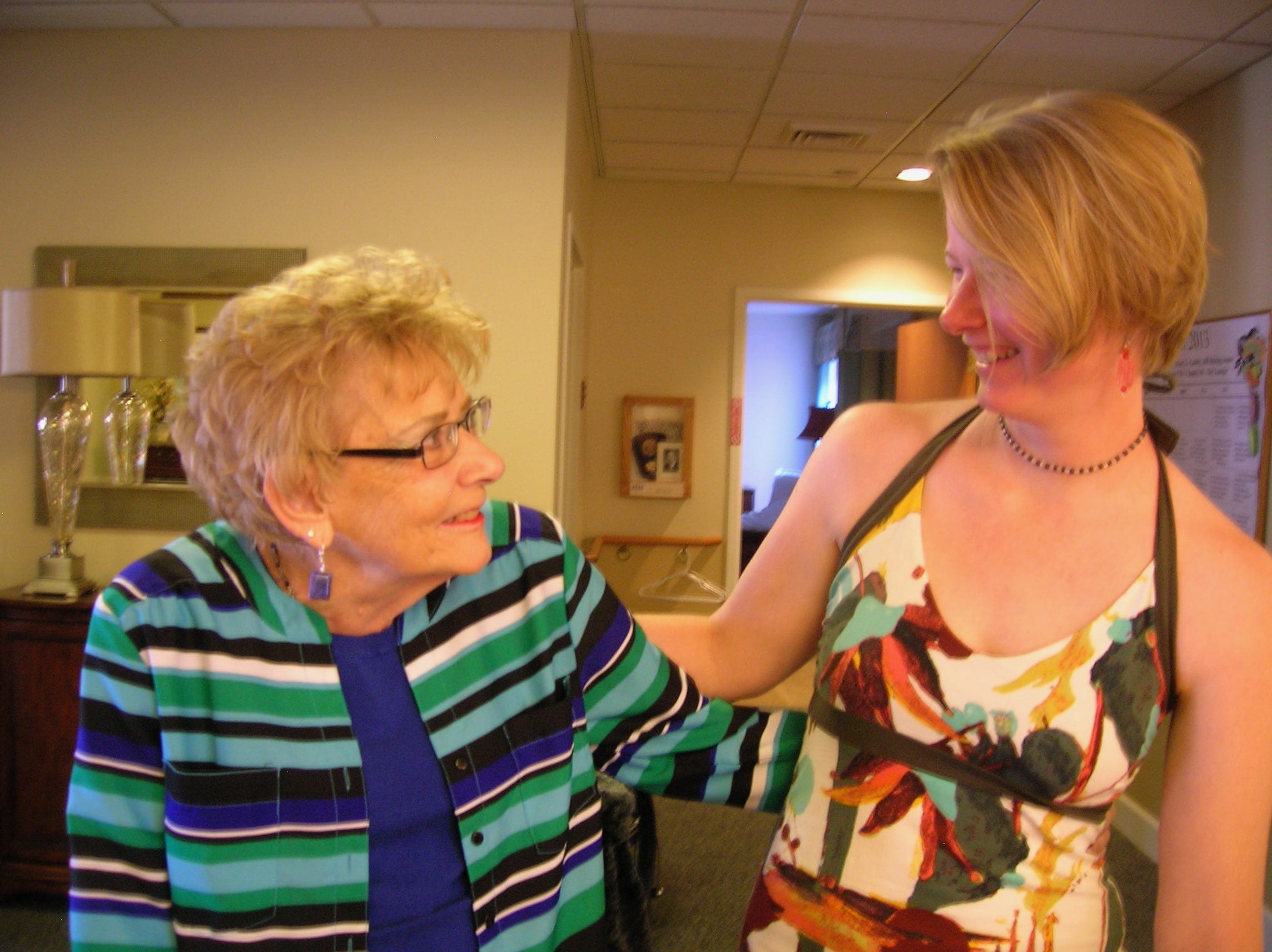
My mom and I on a good day, March 13, 2013 (before the Boulder flood)
*************
Magic happened on the day she died. Mysteries I can’t share in such an online forum as this.
But soon after, I formalized my separation and divorce from my partner of 17 years (half my adult life at that point). I took over responsibility for our special house, our dog, and 3.5 acres of forest on our mountainside. I had intense PTSD and finally found relief through working with a practitioner who offered EMDR, brainspotting, and other healing modalities. I had a tiny bit of breathing room financially, so I could rest, rest, rest.
My mom had been displaced by the Boulder flood of 2013, so her last eight months were even more traumatic and difficult than the prior years. Those stories are for another time.
For now, what’s my pitch? Why should anyone read these posts?
My mom, Milly Weeber, was an extraordinary woman! [Editor: Beautiful but not unique or compelling. A lot of folks feel that way about their parents.]
I want to remember the stories and what I learned. [Editor: But that’s not of interest to the general public.]
I wish to share these memories so her grandchildren can also understand these years and remember who she was. [Editor: Again, nice, but too insider to your own family.]
So, why now? A Google search garners headlines such as:
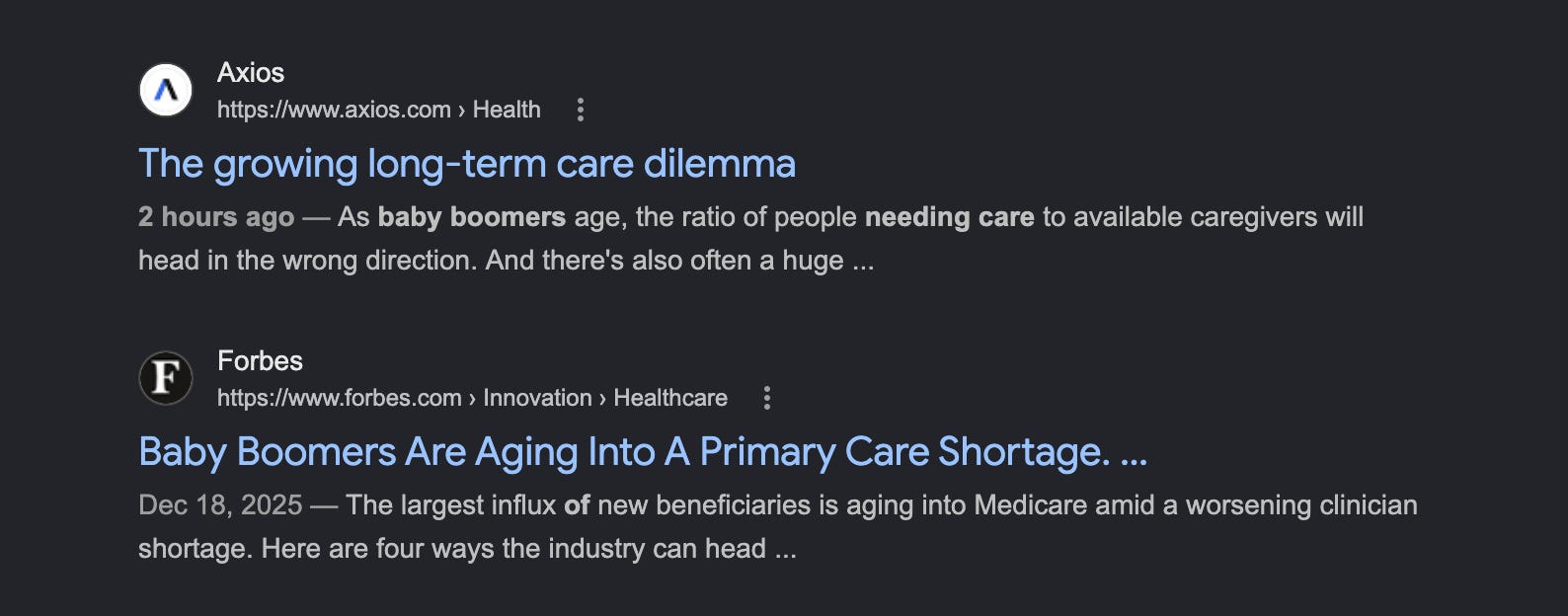
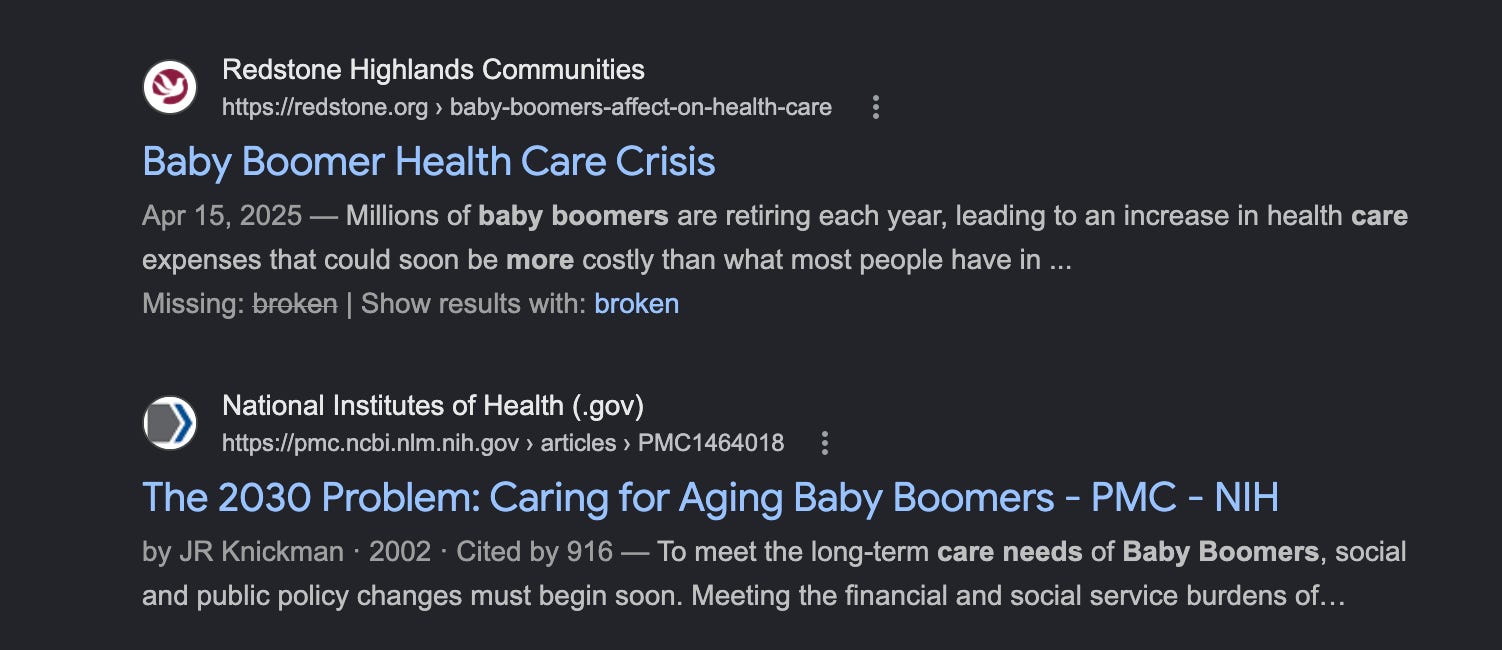
So, I can remind us all of what’s coming: floods of loved ones needing a lot of care and perhaps across decades … when there aren’t enough caregivers, care centers, other systems in place, etc. And not enough money among families or government support.
All of that’s true. And the crises will likely be dramatic, painful, and inhumane. Sharing our stories now can help us lay stepping stones, make it a bit easier for future caregivers, spotlight what exactly needs to change.
I also could remind us all of the “Daughterhood Penalty” and the gender disparities raising ugly truths about our still-often sexist (but also too capitalistic) approach to care inside families and collectively. We’ll get to this later.
But, for me, apart from trying to “market” my Substack, why now?
Because many of the worst things I could imagine happened to me in my 30s and 40s. But like Ezra Bayda in Being Zen, I found that each devastating thing was “my path”—my spiritual path. These stories carry glimmers of hope shapeshifting underneath the murk. The worst shit that happens can sometimes be a doorway …
Because in these dark hours of the deepest attacks on our “democracy,” we tend to think only of what’s being destroyed, not what’s being born. Alongside my mom, as her wingmate, I saw her strong 5’10” body shrink and suffer. She needed oxygen and a wheelchair. But her spirit, her light, her wisdom grew shockingly bright and piercing. She became even more of a sage, guide, and teacher. What’s in this that we need to know more about?
Because amid our global polycrises, we have a sense that humans can’t change—or can’t change fast enough. But we can.
Because some people hesitate when facing the “call” to be a caregiver, especially to their parents. I have reason to say: “Go! Jump in.” You’ll see why.
Because if we can feel, emote, and remember our necessary stories, we can learn to be in touch with our hearts—not leave them behind as we seek our futures. Indeed, that’s the only way we can find our way. … And find our way together.
This is incredibly beautiful and hits so close to home. "The worst shit that happens can sometimes be a doorway"—there is so much gritty truth in that line. When you are deep in the trenches of caregiving, it feels like an exhausting, invisible scaffolding holding up a broken system, and it is so easy to feel like you’re losing yourself in the murk. But finding those "glimmers of hope shapeshifting underneath" is exactly how we survive it.